Cash, Crowd, or VC: How Smart Makers Are Choosing the Right Fuel for Their Big Idea

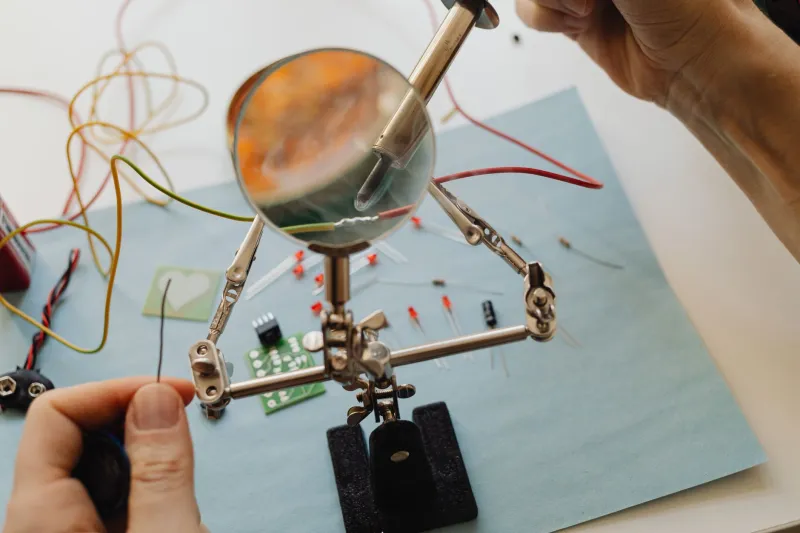
Photo by Photo by Amélie Mourichon on Unsplash on Unsplash
You've got a working prototype sitting on your workbench. Maybe it's a smart irrigation controller you built for your backyard that your neighbors keep asking about. Maybe it's a custom CNC attachment that solves a problem every small-shop woodworker complains about. The thing works. People want it. And now comes the question that trips up more makers than any soldering iron ever could:
How do I actually fund this thing?
The funding world is loud, confusing, and honestly kind of intimidating if you've spent more time with datasheets than pitch decks. But here's the truth — there's no single right answer. The best path depends on your product, your goals, your risk tolerance, and yeah, a little bit on your personality. Let's break it down.
The Bootstrap Mindset: Slower, but Yours
Bootstrapping means funding your venture yourself — through savings, revenue from early sales, maybe a side hustle that keeps the lights on while you build. It's unglamorous. It's slow. And for a lot of hardware makers, it's exactly the right call.
Take Marcus Delray, a maker out of Raleigh, NC, who spent three years building and selling custom mechanical keyboard components through his Etsy shop before launching a full product line. "I never wanted someone else telling me what to make or when to ship," he says. "Bootstrapping meant I could iterate on my own timeline. When I finally had something worth scaling, I already had proof of concept and a real customer base."
The upside of bootstrapping is control — full, uncompromised ownership of your decisions and your company. You don't answer to anyone. You don't dilute your equity. And you build lean habits early, which honestly makes you a better operator in the long run.
The downside? Hardware is expensive. Tooling costs, component minimums, fulfillment logistics — these things eat cash fast. If your product needs serious manufacturing investment before you can sell it at a competitive price, bootstrapping alone might not get you there.
Best for: Makers with lower upfront manufacturing costs, digital-physical hybrid products, or those who can pre-sell to fund production runs.
Crowdfunding: Market Validation with a Built-In Audience
Kickstarter and Indiegogo have launched some of the most iconic hardware products of the past decade. But experienced makers will tell you — crowdfunding isn't free money. It's a marketing campaign that happens to generate cash.
A successful campaign requires polished video content, a compelling story, a realistic fulfillment plan, and an audience you've already been warming up for months. The makers who blow past their funding goals didn't get lucky — they worked it.
Jasmine Torres, who raised $180,000 on Kickstarter for her modular garden sensor system in 2022, put it bluntly: "I spent four months building an email list before I launched. The first 48 hours of a campaign basically determine whether it succeeds. If you don't have backers ready to go on day one, the algorithm buries you."
Crowdfunding also functions as market validation — which is something investors actually pay attention to. Proving that real humans will hand over real money for your idea before it ships is powerful data.
The risk? You're making public promises about timelines and specs before you've fully solved your manufacturing challenges. Hardware delays are common. Backers are not always patient. A botched campaign can damage your reputation before your brand even gets started.
Best for: Consumer hardware with strong visual appeal, a clear use case, and a maker who's willing to invest in pre-launch marketing.
Angel Investors: The Human Money
Angel investors are typically high-net-worth individuals — often former entrepreneurs themselves — who invest their personal capital in early-stage companies. They tend to be more flexible than VCs, more willing to take a bet on a first-time founder, and often bring valuable mentorship and connections alongside their check.
For hardware makers, angels who have backgrounds in manufacturing, supply chain, or consumer electronics are particularly valuable. They understand the complexity of your world in a way that a purely software-focused investor might not.
The equity you give up varies widely, but expect angels to want somewhere between 10% and 30% for a meaningful early investment. The relationship matters enormously here — this person will be part of your journey for years, so make sure your values and vision actually align.
Best for: Makers who need more capital than crowdfunding can provide but aren't yet ready for the scale and scrutiny of institutional VC.
Venture Capital: The Rocket Fuel You May Not Need
Let's be honest — venture capital is not the right fit for most makers. VC firms are optimizing for massive outcomes. They need a small number of their portfolio companies to return 10x, 50x, 100x to make the math work. That means they're looking for businesses that can scale to tens or hundreds of millions in revenue.
If your vision is a profitable, sustainable business that lets you make cool stuff and pay your team well — that's genuinely great, but it's not a VC story.
That said, if you're building in a space with genuine mass-market potential, VCs who specialize in hardware — firms like Bolt, Lux Capital, or Root Ventures — do exist and do fund physical products. What do they actually look for beyond the prototype?
"The product is almost secondary at the early stage," says one hardware-focused investor who asked to remain anonymous. "We're betting on the founder. We want to see obsessive domain knowledge, evidence that you understand your customer deeply, and some signal that you can build and lead a team. A maker who's been in the trenches with this problem for years and has already sold their first hundred units is way more compelling than someone with a beautiful CAD model and no customers."
Key things VCs evaluate:
- Market size — Is there a big enough addressable market?
- Defensibility — Can you protect your advantage over time?
- Founder-market fit — Why are you the right person to build this?
- Unit economics — Do the margins make sense at scale?
- Traction — Any evidence real people want this?
Best for: Hardware startups with massive market potential, strong IP, and founders who are genuinely ready for the fast-growth, high-accountability world of institutional investment.
So Which Path Is Right for You?
Here's a framework to think it through:
-
Start by asking what you actually want. A lifestyle business that funds your creative work? A company you want to sell in five years? Something you want to grow into a major brand? Your answer should drive your funding strategy, not the other way around.
-
Get to revenue first, if at all possible. Every path gets easier once you've got paying customers. It validates your idea, builds your confidence, and gives you negotiating leverage with any investor.
-
Don't raise money until you know why you need it. "To grow" is not an answer. Know exactly what the capital will unlock and how it changes your trajectory.
-
Treat your network like infrastructure. The maker community — hackerspaces, local entrepreneur meetups, online forums — is full of people who've navigated this before. Ask them. Most makers are remarkably generous with hard-won knowledge.
Funding your hardware idea is one of the harder parts of the maker-to-entrepreneur journey. But it's not a mystery. It's a set of tradeoffs, and the makers who navigate it best are the ones who understand their own goals clearly enough to choose the right tool for the job — which, when you think about it, is exactly what good making has always been about.