Printed, Programmed, and Life-Changing: How Everyday Makers Are Closing the Gap in American Healthcare
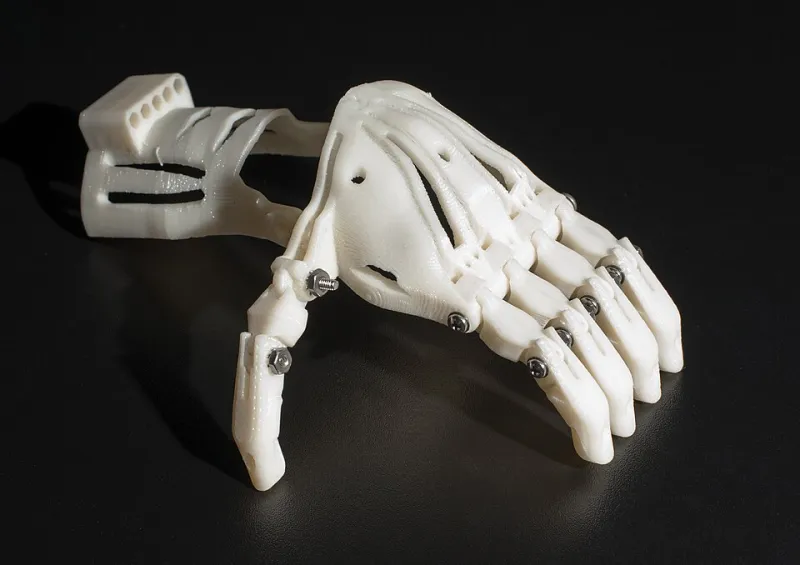
Photo: The U.S. Food and Drug Administration, Public domain, via Wikimedia Commons
Somewhere in a suburb outside Columbus, a retired electrical engineer named Dave is printing a prosthetic hand for a seven-year-old he's never met. The design is open-source, downloaded for free from a shared repository. The materials cost roughly $40. A comparable commercial device would run anywhere from $10,000 to $80,000 — and insurance doesn't always cover it.
Dave isn't a doctor. He's a maker. And increasingly, that distinction matters a lot less than you'd think.
Across the United States, a quiet revolution is taking shape in basements, community maker spaces, and university fab labs. Citizen engineers and DIY innovators are designing medical tools, assistive devices, and diagnostic equipment that are reaching people the traditional healthcare supply chain has long ignored — or simply priced out entirely. This isn't fringe activity anymore. It's a movement with real stakes, real impact, and a few very real regulatory complications.
The Prosthetics Problem — and the Maker Solution
The U.S. prosthetics market is worth billions of dollars. It is also, depending on who you ask, spectacularly bad at serving a significant portion of the people who need it most.
Children, in particular, fall through the cracks. Kids grow. A prosthetic limb fitted for a six-year-old is useless by age eight. When each device costs tens of thousands of dollars and insurance reimbursement cycles are sluggish, families often go without — or wait in limbo for months.
Enter e-NABLE, a global network of volunteer makers who 3D print prosthetic hands and arms for children and adults in need. Founded in 2013 and with a strong U.S. chapter network, the organization has distributed thousands of devices across all 50 states and more than 100 countries. Designs are shared openly on platforms like Thingiverse and the e-NABLE Community Hub. Local volunteers handle printing and assembly. Recipients pay nothing.
The devices aren't FDA-cleared Class II medical equipment. They're functional assistive tools — and for a kid who just wants to hold a pencil or grip a bicycle handlebar, that distinction is largely academic. Parents who've received them describe the experience as transformative in ways that a corporate product catalog simply can't capture.
Hearing Aids at 1% of the Cost
Hearing loss affects roughly 15% of American adults, according to the National Institutes of Health. Hearing aids, which are essentially tiny amplifiers with sophisticated signal processing, have historically cost between $2,000 and $7,000 per pair. Until recently, they required a prescription and could only be dispensed by licensed audiologists.
The 2022 FDA rule change allowing over-the-counter hearing aids was a landmark moment — but it didn't solve the underlying engineering and affordability gap for people with more severe or atypical hearing needs.
Makers have been chipping away at that gap for years. Open-source hearing aid projects like OpenEarGo and the work coming out of university maker labs have demonstrated that functional, programmable hearing devices can be built for under $100 in parts. Some makers have gone further, designing devices tailored to specific types of hearing loss that commercial manufacturers simply don't prioritize because the market segment isn't large enough to justify R&D investment.
For underserved rural communities and low-income households, these projects aren't a novelty. They're a lifeline.
Diagnostic Tools Built in Fab Labs, Not Factories
The COVID-19 pandemic cracked open a conversation that the maker community had been having quietly for years: what happens when the medical supply chain fails?
When PPE ran short in 2020, maker spaces from Seattle to Miami pivoted almost overnight to produce face shields, ventilator components, and isolation equipment. The FDA issued emergency enforcement discretion policies that effectively gave makers a temporary green light to produce certain devices without the usual regulatory burden. Thousands of hospitals received maker-produced equipment that kept healthcare workers safer during the worst weeks of the crisis.
But the more lasting innovation came from the diagnostic side. Researchers and makers at institutions like MIT and Stanford, working alongside community engineers, developed low-cost pulse oximeters, portable electrocardiogram devices, and even early-stage cancer screening tools using open-source hardware frameworks like Arduino and Raspberry Pi. Some of these designs have since been refined and are now being piloted in rural health clinics where access to traditional diagnostic equipment is limited by cost or infrastructure.
The Foldscope — a paper microscope that costs less than a dollar to produce — is perhaps the most striking example. Developed at Stanford and now distributed globally, it's being used in classrooms, field clinics, and community health programs across the American South to perform basic diagnostic work that previously required lab equipment costing thousands of dollars.
Navigating the Regulatory Reality
Let's not sugarcoat it: building medical devices outside of established regulatory frameworks is complicated, and the stakes are genuinely high. The FDA classifies medical devices across three tiers based on risk, and the pathway to legal clearance for even a Class I device involves documentation, testing, and compliance infrastructure that most individual makers don't have.
The maker community doesn't always handle this tension gracefully. There are real risks when well-intentioned people build and distribute devices without adequate testing or oversight. The history of DIY medicine includes cautionary tales alongside the success stories.
But the most thoughtful corners of the maker-medicine world are grappling with this seriously. Organizations like Helpful Engineering, which grew out of the pandemic response, have built volunteer networks that include regulatory experts, biomedical engineers, and clinical advisors who work alongside makers to ensure that open-source medical projects meet safety standards before they reach users.
The FDA itself has taken a more nuanced posture in recent years, acknowledging that rigid enforcement against low-risk assistive devices — particularly those serving populations with no commercial alternatives — may cause more harm than it prevents. That's not a blank check, but it signals a growing recognition that the maker community is filling genuine gaps.
What Open-Source Medicine Actually Looks Like
Platforms like Hackaday.io, GitHub, and the Open Source Medical Supplies repository have become critical infrastructure for the maker-medicine movement. Designs are versioned, peer-reviewed by community members, and iterated publicly. When a flaw is discovered, it gets fixed — fast, and transparently.
This model isn't so different from how open-source software development works, and it has similar strengths: distributed problem-solving, rapid iteration, and a bias toward accessibility over profit margin.
For communities that have historically been underserved by the American healthcare system — rural populations, low-income households, communities of color — open-source medical innovation isn't an abstract ideological position. It's a practical response to a system that has repeatedly failed to reach them.
The Maker as Healthcare Disruptor
None of this means that makers are going to replace hospitals, pharmaceutical companies, or trained medical professionals. That's not the point, and the best makers in this space are the first to say so.
The point is that the gap between what the American healthcare system delivers and what people actually need is enormous — and getting larger. Commercial incentives drive medical innovation toward profitable demographics and high-margin products. The maker movement, by contrast, tends to drift toward the hardest problems and the most underserved people.
That's not a coincidence. It's a value system. And right now, it's saving lives.
If you've got a 3D printer, a soldering iron, and a few hours a week, there's a community out there that could use exactly what you know how to do. The designs are free. The need is real. The rest is up to you.