Blueprints for a Better World: How American Makers Are Fixing Real Problems, One Open-Source File at a Time
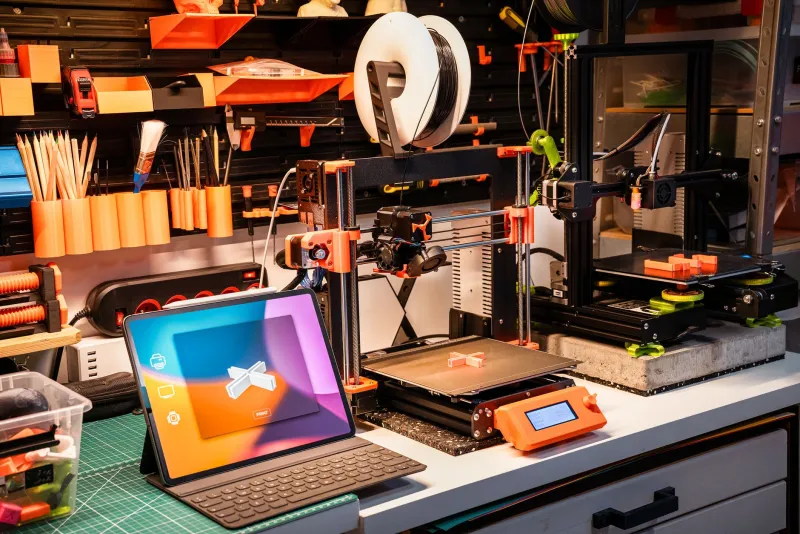
There's a particular kind of quiet satisfaction that happens in a garage at 11 p.m. when a 3D printer hums along, laying down layer after layer of something that didn't exist this morning. For millions of American makers, that moment isn't just a hobby — it's the front line of a slow-moving revolution.
Open-source hardware and design communities have made it possible for people without engineering degrees, venture capital, or factory access to build things that genuinely matter. We're not talking about novelty keychains or decorative plant pots (though hey, those are great too). We're talking about prosthetic hands for kids, low-cost water filtration systems for rural communities, and adaptive tools that help people with disabilities live more independently.
We tracked down a handful of makers doing exactly this kind of work, and what they told us was equal parts inspiring and surprisingly practical.
The Hand That Changed Everything
Jordan Kessler, a fabricator and hobbyist based outside of Columbus, Ohio, first stumbled onto the e-NABLE community — a global network that shares open-source designs for 3D-printed prosthetic hands — when his neighbor's seven-year-old son was born with a limb difference.
"I'd been printing random stuff for two years," Jordan says, "functional brackets, replacement parts for appliances. But when I realized I could print a functional hand for maybe thirty bucks in materials, something clicked."
The e-NABLE network hosts dozens of freely downloadable hand and arm designs on platforms like Thingiverse and their own site, all licensed for free use and modification. Jordan downloaded a design, printed a prototype, and iterated three times based on feedback from the child's occupational therapist. The final version cost him about $28 in PLA filament and a weekend of his time.
"Traditional pediatric prosthetics can run thousands of dollars and need to be replaced constantly as kids grow," he explains. "With open-source files, you just reprint. The kid gets a new hand in a color he picked out himself. That matters."
Jordan has since connected with a local maker collective and printed over forty devices for families in central Ohio, all at no charge.
Clean Water, Open Code
On the other side of the country, a small group of makers in Tucson, Arizona, is tackling a different kind of crisis. The collective, which calls itself Desert Bench Works, started experimenting with open-source water filtration designs after reading about contamination issues in rural communities across the Southwest.
"There are people two hours from us who don't have reliable access to clean drinking water in 2024," says collective member and electrical engineer Priya Nambiar. "That felt insane to us. And then we found these open-source biosand filter and ceramic pot filter designs and thought — we can build these."
Biosand filters and ceramic filtration systems have been documented and shared openly by organizations like Potters for Peace and various university engineering programs. The designs are freely available, require no proprietary parts, and can be built with locally sourced materials.
Desert Bench Works has built and donated eleven filtration units so far, working with a local nonprofit to identify families in need. They've also started hosting build workshops, training community members to construct and maintain the filters themselves.
"That's the whole point of open source," Priya says. "It's not charity. It's capacity building. Once people know how to build these, they don't need us anymore. That's the goal."
Adaptive Tools, Designed by Everyone
Open-source design has also found a powerful home in the disability and adaptive technology space. AT Makers, a community network focused on open-source assistive technology, connects makers with people who have specific needs — and shares the resulting designs freely so anyone can build them.
Marcus Webb, a retired machinist turned full-time maker in Portland, Oregon, got involved after his mother was diagnosed with ALS. "She lost fine motor control pretty quickly," he says. "There are commercial adaptive tools out there, but they're expensive and often not quite right for a specific person's situation."
Marcus began modifying open-source designs for utensil holders, page turners, and switch-adapted devices, sharing his iterations back to the AT Makers community. "The beautiful thing is that someone in Michigan might download my file, tweak it for their dad's situation, and post that version. Now we've got something better than either of us could have made alone."
That collaborative improvement cycle — download, modify, share, repeat — is the beating heart of the open-source maker ecosystem.
Why Open Source Changes the Game
What connects Jordan's printed prosthetics, Desert Bench Works' water filters, and Marcus's adaptive tools isn't just generosity. It's a structural shift in who gets to innovate.
Traditional product development requires capital, manufacturing relationships, intellectual property protection, and distribution channels. Open-source hardware flips that model on its head. When a design is freely shared, the cost of entry drops to the price of materials and time. A maker in rural Kansas has access to the same design files as an engineer at a Fortune 500 company.
"Open source democratizes the means of production," says Priya. "That sounds like a big political statement, but it's actually just practical. It means more people can solve more problems."
Platforms like GitHub, Thingiverse, Printables, and Instructables have become the repositories of this movement, hosting millions of files that anyone can download, learn from, and build on. Licenses like CERN Open Hardware License and Creative Commons make the legal framework clear: take it, use it, improve it, share it back.
Getting Started in Your Own Shop
You don't need to be a seasoned fabricator to plug into this ecosystem. Here's where to start:
- Explore existing communities. Networks like e-NABLE, AT Makers, and Appropedia are already organized around real-world problems and have welcoming onboarding resources.
- Find your local makerspace. Many hackerspaces and community workshops have 3D printers, laser cutters, and other tools available for membership fees that are a fraction of buying your own equipment.
- Download before you design. Chances are someone has already tackled a version of the problem you're interested in. Start with an existing file and modify from there.
- Share your iterations. Even if your version isn't perfect, posting it back to the community means someone else can improve it. Progress is collaborative.
- Connect locally. Organizations and nonprofits in your area may already be looking for makers to help with specific needs. Reach out.
The garage-to-global pipeline isn't a metaphor. It's a literal description of how a design file born on a workbench in Ohio ends up helping a kid in New Mexico. American makers have always had a tradition of tinkering, building, and sharing knowledge — open-source hardware just gave that tradition a global distribution network.
The problems are real. The tools are free. The only thing left is the making.