Making at Every Age: How to Stop Fighting Your Creative Clock and Start Working With It

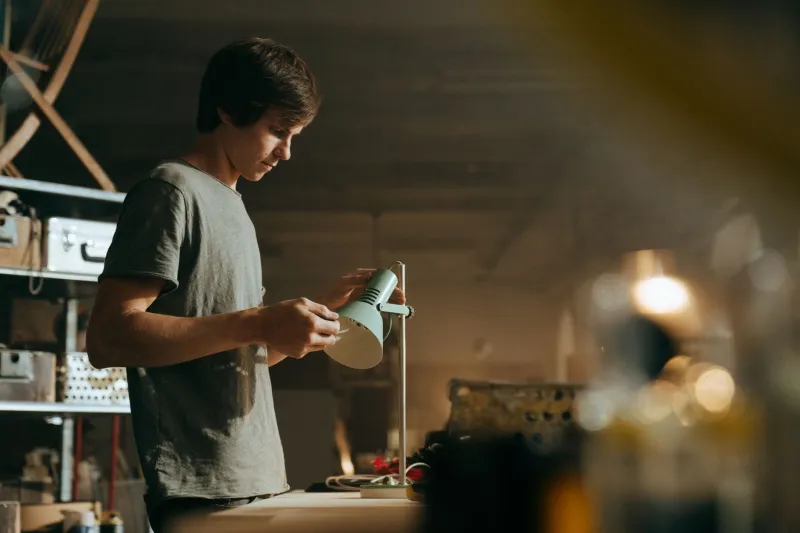
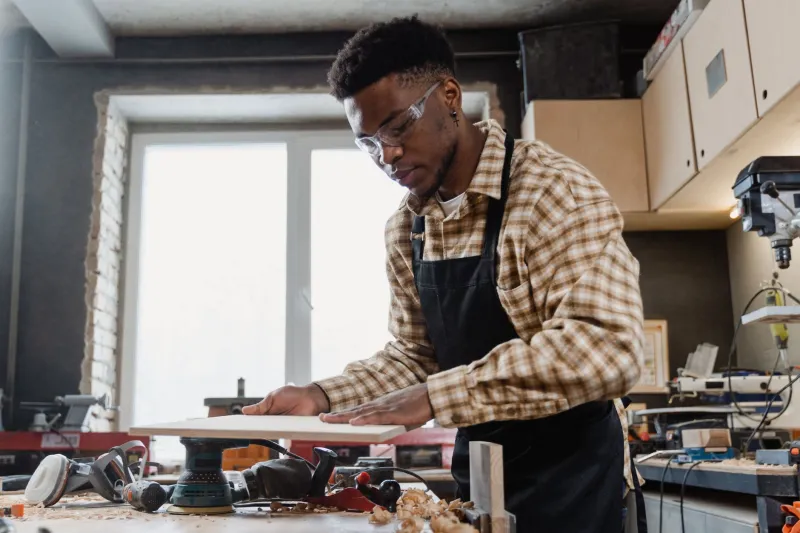
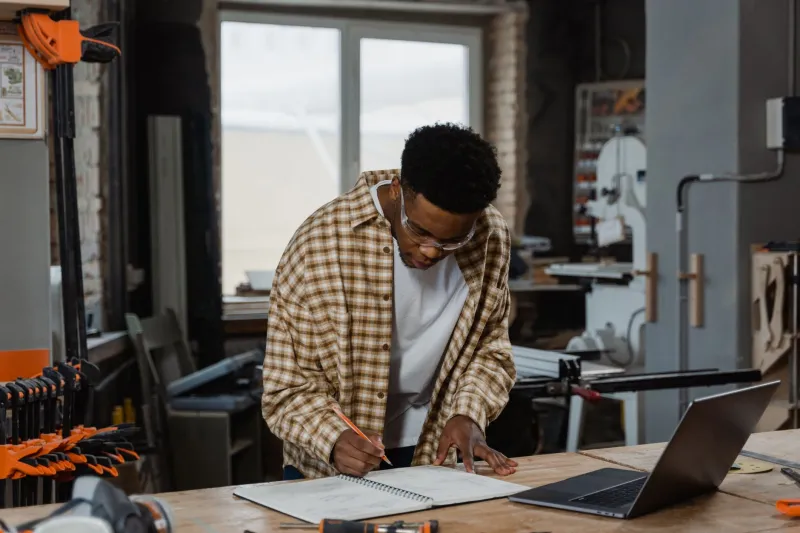
Photo: diverse makers of different ages working together in a workshop, via images.stockcake.com
There's a particular kind of frustration that hits a maker in their mid-forties. You remember — maybe a little too clearly — the days when you could disappear into the garage at 10 p.m. with a half-baked idea and emerge at sunrise with something tangible. Now, two hours in, your back is talking to you, your eyes are done with fine detail work, and the idea that felt electric before dinner has somehow gone quiet.
The temptation is to frame that as loss. But what if it isn't?
What if your making practice isn't deteriorating — it's just changing shape?
The All-In Years: Young, Restless, and Building Everything
Ask almost any maker about their early years, and the words come fast: obsessive, chaotic, relentless. There's a metabolic quality to creativity in your teens and twenties that's genuinely hard to replicate later. The prefrontal cortex is still under construction, risk tolerance is high, and the consequences of a failed project feel manageable — even exciting.
Jordan Tse, a 28-year-old electronics hobbyist out of Austin, describes his current making life as "basically a controlled chaos situation." He's got four projects in various states of completion on his workbench at any given time, he pulls late nights without much consequence, and he pivots hard when something isn't working. "I don't really plan that much," he admits. "I just start and figure it out."
That style of making — sprawling, exploratory, a little reckless — is genuinely productive at this life stage. The energy budget is there. The recovery time is short. And crucially, the depth of experience needed to know why something won't work hasn't accumulated yet, which means you'll try things that more seasoned makers might skip. Sometimes that's how breakthroughs happen.
The practical advice for makers in this season? Let it rip. Build the weird thing. Start too many projects. You're not being unfocused — you're building the reference library that will serve you for decades.
The Squeeze Years: Making When Life Gets Loud
Somewhere in the thirties and early forties, the math changes. Careers are demanding more. Kids, mortgages, aging parents, community obligations — the inputs multiplied while the hours stayed the same. This is the season where a lot of makers quietly step back from the bench, not because they lost the love for it, but because they genuinely can't find the time.
Susan Morrow, a woodworker in Columbus, Ohio, hit this wall hard in her late thirties. "I went from building furniture pieces every couple of months to not finishing anything for almost two years," she says. "I thought maybe I just wasn't a maker anymore."
What she eventually discovered was that she needed to completely reframe what a "making session" looked like. Instead of waiting for long, uninterrupted blocks of time that weren't coming, she started breaking projects into micro-phases — thirty minutes of joinery here, an hour of finishing work on a Sunday morning there. "I stopped treating it like I needed the whole day or nothing," she says. "And honestly, the work got more deliberate. I wasn't rushing to finish because I had the time. I was being really intentional with each step."
This is the real skill of the squeeze years: learning to make in the margins. It's also when project selection gets sharper. You stop starting things you're not genuinely committed to finishing. That's not a creative limitation — that's editing.
The Depth Years: Slower, Smarter, and Surprisingly More Productive
Here's the thing nobody really talks about when it comes to making as you age: experience is a force multiplier. A maker in their fifties or sixties with thirty years of accumulated knowledge behind them isn't slower — they're more efficient. They've already made most of the obvious mistakes. They can look at a material and know how it'll behave. They can hear a sound from a tool and diagnose the problem before it becomes a failure.
Rick Dominguez has been building custom motorcycles in his Albuquerque shop since 1987. At 61, he's not working the fourteen-hour days he used to, but he's also not wasting hours chasing down problems he already knows the answer to. "I've got fewer projects going at once, but they're the right projects," he says. "I'm not interested in making something just to make it anymore. I want to make something that matters."
Physically, this season does require some honest adaptation. Fine motor work might need better lighting. Standing on concrete for six hours might need a fatigue mat and more breaks. Some tools might get swapped for ergonomic alternatives, or certain techniques get handed off to jigs and fixtures that do the repetitive work. None of that is giving up — it's engineering your environment to match your current body. Which, when you think about it, is just good making practice applied to your own life.
What Every Season Has in Common
For all the differences across these life stages, the makers who stay active across decades share a few consistent traits.
They stay curious more than they stay current. The goal isn't to keep up with every new tool or technique. It's to keep asking questions. What happens if I try this differently? What would this look like in a different material? Curiosity doesn't age out.
They build community. Isolation is the silent project-killer at every life stage. Whether it's a local makerspace, an online forum, or just a neighbor who also has a garage full of tools, having people to talk shop with keeps the creative metabolism running. The Maker Movement is built on exactly this — the idea that making is more sustainable when it's shared.
They give themselves permission to evolve. The makers who struggle most are the ones holding themselves to a standard from a previous season of life. If you're comparing your current output to what you were doing at 25, you're using the wrong measuring stick. Compare yourself to who you were last month. Are you still learning? Still building? Still excited by the process? That's the metric that matters.
Working With Your Season, Not Against It
If there's one takeaway from talking to makers across generations, it's this: the goal isn't to preserve some idealized version of your making self. It's to keep making, in whatever form fits the life you actually have right now.
That might mean shorter sessions. It might mean simpler projects, or more complex ones. It might mean shifting from physical fabrication to design, or from solo work to collaborative builds. It might mean finally writing down the techniques you've spent decades learning so they don't disappear with you.
Your creative output is changing. It has been since the day you picked up your first tool. The makers who figure out how to work with that — rather than mourn what used to be — are the ones still at the bench decades later, still building things that matter.
And that's worth more than any all-nighter ever was.