Homegrown and Green: The Independent Makers Quietly Reshaping How America Builds Things
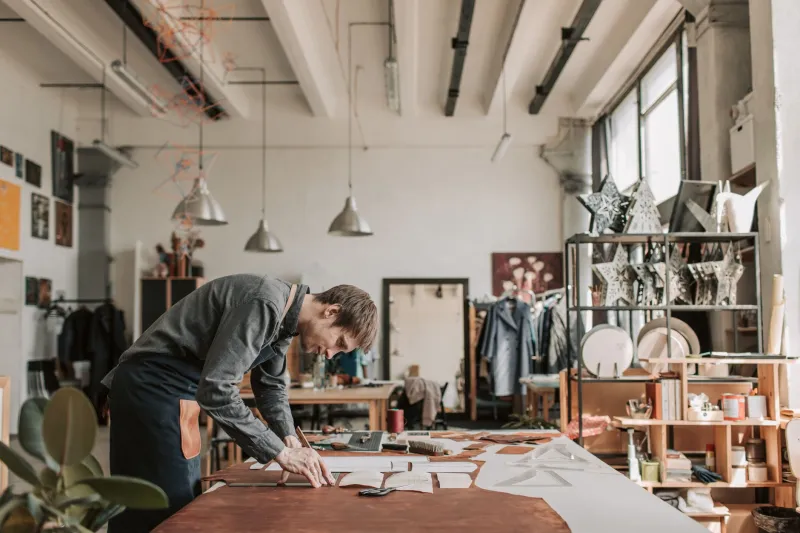
In a converted barn studio in rural Vermont, Leah Tran is doing something that a Fortune 500 packaging company is now trying to replicate. She's making shipping materials out of agricultural waste — specifically, the husks and fibers left over from local hemp and corn harvests — that fully break down in a backyard compost pile within 90 days. No styrofoam. No plastic film. No guilt.
Leah didn't set out to disrupt the packaging industry. She was just trying to ship her handmade ceramics without contributing to a landfill. But when she started posting her process online, the response was overwhelming — and not just from other makers. She began getting emails from small e-commerce businesses, then mid-sized retailers, then eventually a quiet inquiry from a logistics company that moves millions of packages a year.
"I genuinely thought I was solving a personal problem," she says with a laugh. "Turns out a lot of people had the same problem and nobody had bothered to solve it at a small scale first."
This is the story of American making right now. Independent creators, working in garages and barns and spare bedrooms, are developing sustainable products and processes that established companies — with their enormous R&D budgets and consultants — somehow missed. And the gap is closing fast.
Why Small Makers Are Winning the Sustainability Race
It seems counterintuitive. How does a solo maker with a few hundred dollars in materials outmaneuver a company with a sustainability department and a full supply chain?
The answer has a lot to do with constraints — and freedom.
Big manufacturers are locked into existing infrastructure. Switching to a new material or process means retooling factories, renegotiating supplier contracts, and getting buy-in from a dozen departments. For an independent maker, none of those barriers exist. If a material doesn't work, you try another one next week. If a technique is wasteful, you redesign it tonight.
Jordan Okafor, who builds modular outdoor furniture from reclaimed urban lumber in Detroit, puts it plainly: "I can't afford waste. Every board I use was pulled from a demolition site or a fallen tree. That constraint forced me to figure out joinery and finishing techniques that actually make the furniture stronger — and way more interesting looking — than stuff built from virgin lumber."
Jordan's pieces started showing up on design blogs a few years ago. Last year, a regional outdoor lifestyle brand reached out about a potential collaboration. He's currently negotiating terms that would let him maintain creative control while scaling production through a small network of other Detroit woodworkers.
Products That Went From Personal Projects to Industry Benchmarks
Leah's packaging and Jordan's furniture aren't isolated cases. Across the country, maker-born sustainable innovations are forcing conversations in boardrooms that weren't happening before.
Beeswax wraps — now sold by multiple national brands — were popularized by home makers looking for plastic wrap alternatives years before grocery stores stocked them. The commercial versions that exist today largely owe their formula and form factor to the open-source recipes that circulated in DIY communities.
Low-waste resin alternatives using plant-based materials were being tested in home studios and shared on maker forums long before any major craft supply company took the category seriously. Several brands now sell bio-resin kits that trace their development lineage directly back to independent experimenter communities.
Flat-pack, reclaimed-material furniture — a segment now embraced by several design-forward retailers — was being built and sold at craft fairs and on Etsy by independent makers who figured out the engineering challenges through trial, error, and community knowledge-sharing.
The pattern is consistent: maker community identifies a problem, develops a solution through open experimentation, shares the knowledge freely, and eventually the broader market catches up. Sometimes years later.
Positioning Your Work for Real-World Impact
If you're a maker working on something sustainable — or thinking about it — there are concrete ways to amplify your impact beyond your own workshop.
Document everything and share it openly. The makers whose work has influenced industries the most are almost always the ones who documented their process in detail and published it. Open-source files, detailed build logs, material sourcing lists — these aren't just helpful to other makers. They create a record of innovation that establishes provenance and community credibility.
Name the problem you're solving, not just the product you're making. Leah doesn't just sell compostable packaging — she solves the problem of eco-conscious small businesses that can't afford or access sustainable shipping materials at low volumes. Framing your work around a problem makes it legible to potential partners, press, and customers outside the maker community.
Connect with sustainability-focused networks. Organizations like local green business alliances, zero-waste community groups, and circular economy networks are full of people actively looking for exactly the kind of solutions independent makers develop. These connections can turn a workshop project into a pilot program faster than any pitch deck.
Don't underestimate craft fairs and local markets. Some of the most significant product feedback Leah and Jordan have received came from face-to-face conversations at local markets — not from online analytics. Real customers explaining what they actually need, in real time, is invaluable R&D that no corporation can easily replicate.
The Bigger Picture
There's something worth sitting with here: the maker community has always been about solving problems with what you have, sharing what you learn, and building things that matter to real people. Sustainability isn't a trend that the maker world adopted — in many ways, it's always been baked into the ethos. Using reclaimed materials, reducing waste, building things to last rather than to replace — these are maker values that predate any corporate ESG report.
What's changed is that the rest of the world is finally paying attention.
Established brands are hiring makers as consultants. Retailers are seeking out small-batch sustainable products for their shelves. Investors are funding maker-originated companies at a pace that would have seemed unlikely a decade ago. The garage-to-global pipeline is real, and it runs on exactly the kind of curiosity and resourcefulness that defines this community.
You don't need a factory to change how things are made. You just need a workshop, a problem worth solving, and the willingness to share what you figure out along the way.
Leah's next batch of compostable packaging ships next month. She's already working on version three of the formula — and yes, she's posting the full recipe online for anyone who wants it.