Stop Buying Gear and Start Building Mastery: The Case for a Smaller Tool Kit
There's a moment most makers know well. You're mid-project, something isn't working quite right, and instead of sitting with the problem, your browser opens almost on its own. Fifteen minutes later you're deep in a product review rabbit hole, convinced that a new router, a better soldering station, or a fancier laser cutter is exactly what's standing between you and the project you've been imagining.
It feels like progress. It isn't.
This is the tool acquisition trap — and it catches even the most self-aware makers off guard. The good news is that recognizing it is half the battle. The better news is that some of the most skilled, prolific creators in the DIY community have already figured out the antidote: saying no.
Why Your Brain Loves New Tools (Even When You Don't Need Them)
Psychologists have a name for the buzz you get when you buy new equipment: it's a form of anticipatory reward. Your brain releases dopamine not when you use the tool, but when you imagine using it. That mental highlight reel of perfectly clean cuts and flawless joints feels so real that the purchase starts to feel like the accomplishment itself.
Marketers in the maker space know this. The language around tool upgrades is almost always aspirational — what you'll be able to do, not what you already can. And in a culture that genuinely celebrates innovation and new technology, it's easy to mistake consumption for creativity.
But here's the thing: creativity doesn't live in your tool cabinet. It lives in your hands, your problem-solving instincts, and the muscle memory you've built over hundreds of hours of actual making.
The 'One More Tool' Myth
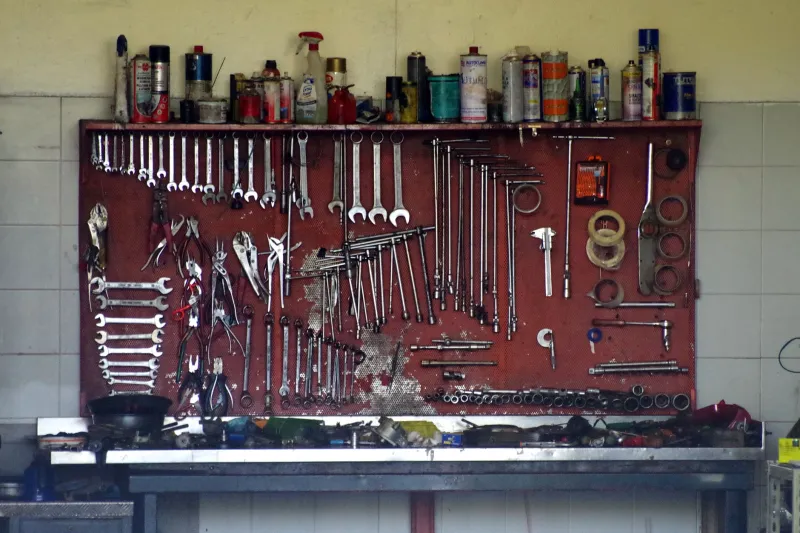
Rachel Okafor has been woodworking out of her garage in Columbus, Ohio for eleven years. Her shop is deliberately minimal — a table saw, a router, a set of hand planes, and a workbench she built herself in year two. People who visit are often surprised by what she doesn't have.
"I used to upgrade constantly," she says. "New jigs, new accessories, always chasing something. And I was producing mediocre work because I never spent enough time with any one tool to really understand it. The day I stopped buying and started practicing was the day my work actually got good."
Rachel's experience isn't unusual. Talk to experienced makers across any discipline — electronics, leatherwork, ceramics, metalworking — and a pattern emerges. The people doing the most interesting, technically refined work tend to have fewer tools, not more. What they have instead is an almost intimate understanding of the equipment they've chosen to keep.
Deep Familiarity Is a Superpower
There's a concept in skill development sometimes called "tool fluency" — the point at which a tool stops being something you operate and starts being an extension of your intent. A carpenter who has used the same hand saw for a decade doesn't think about the saw. A ceramicist who has thrown on the same wheel for years doesn't think about the wheel. The tool disappears, and what's left is pure creative problem-solving.
You can't get there if you're constantly onboarding new equipment. Every new tool comes with a learning curve, a set of quirks, a new vocabulary of sounds and feedback that takes time to decode. When you're always at the beginning of that curve, you never reach the middle — let alone the end.
Marco Delgado, a self-taught electronics maker from Austin who runs a popular YouTube channel on DIY audio gear, put it bluntly: "I see beginners spending $400 on a premium soldering station when they haven't learned to tin a tip properly yet. The fancy iron won't fix that. Hours at the bench will."
Practical Ways to Break the Upgrade Cycle
Knowing the trap exists is useful. Having a plan to avoid it is better. Here are some strategies that real makers use to stay focused on craft instead of gear:
Set a moratorium. Give yourself a defined period — three months, six months, a full year — during which you commit to buying zero new tools. No exceptions. You'll be amazed how often problems you thought required new equipment turn out to be solvable with what you already have.
Keep a "want list" with a waiting period. When the urge to buy strikes, write the tool down and set a 30-day reminder. If you still feel like you genuinely need it after a month of working without it, that's a more honest signal than an impulse buy.
Audit what you actually use. Go through your shop and make a list of every tool you've touched in the last six months. The stuff on the other list? It's probably not solving a real problem — it's just taking up space and mental bandwidth.
Borrow before you buy. Most maker communities — hackerspaces, fab labs, tool libraries — have equipment you can access without owning. If you use a borrowed tool regularly for three months and it genuinely changes your output, that's when a purchase makes sense.
Reframe "limitations" as creative constraints. Some of the most inventive work in any craft tradition came from makers who had to figure things out with limited resources. Constraints force ingenuity. A fully stocked shop can actually reduce creativity by making every solution feel equally available.
When Upgrading Actually Makes Sense
None of this is an argument against tools. Good equipment matters. And there are real moments when an upgrade is genuinely warranted — when a tool is physically limiting your safety, when a specific capability is essential to a new direction in your work, or when a piece of equipment has simply worn out.
The difference is intentionality. Buying a tool because you've identified a specific, recurring limitation in your current work is a strategic decision. Buying one because a YouTube algorithm served you an unboxing video on a slow Tuesday night is something else entirely.
The question worth asking before any purchase is simple: What problem, exactly, does this solve? If you can't answer that in one clear sentence, close the tab.
The Maker Who Works With What They Have
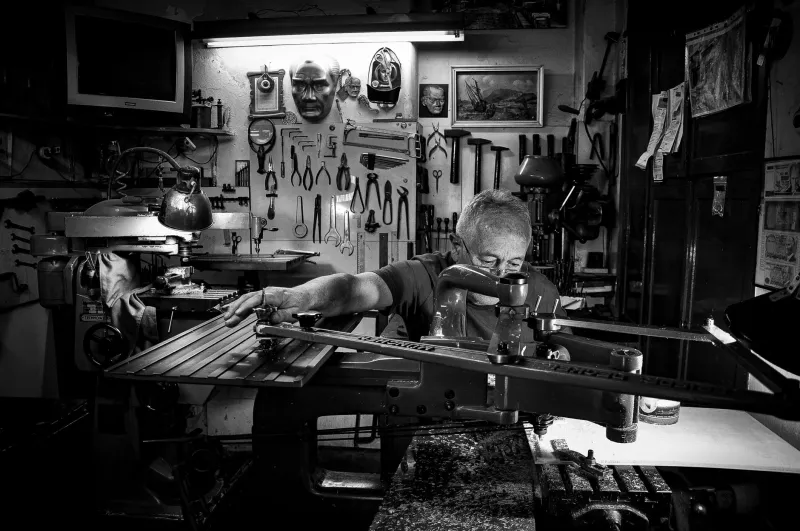
There's something genuinely inspiring about watching a skilled maker produce extraordinary work with ordinary tools. It reframes the whole conversation. Suddenly the focus shifts back where it belongs — to the person, the practice, and the accumulated knowledge that no product page can sell you.
The makers who build the most interesting things, who develop the most distinctive voices in their craft, are almost never the ones with the biggest budgets or the newest gear. They're the ones who showed up to the same bench, with the same tools, over and over again, until the work started to speak for itself.
That's the real upgrade. And it doesn't cost a thing.