Turning Your Craft Into Cash Without Killing the Joy That Started It All

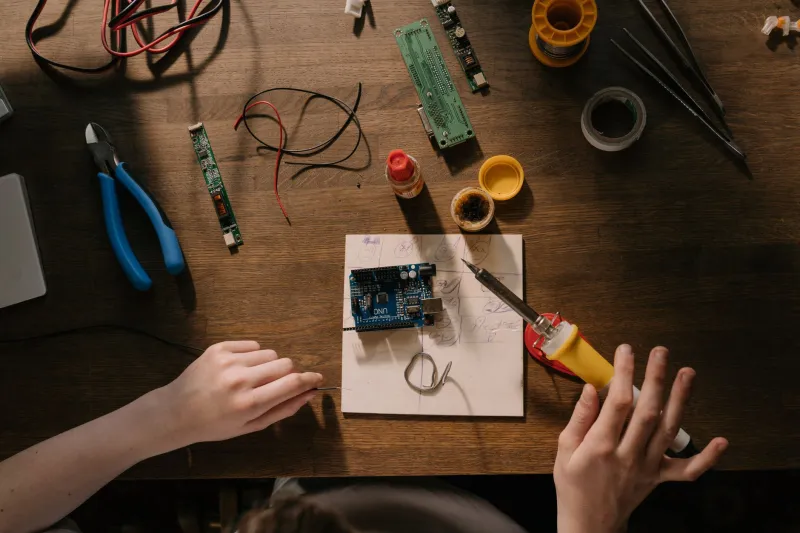
There's a moment a lot of makers know intimately. You've just finished a piece — maybe it's a hand-turned walnut bowl, a custom leather bag, or a circuit board you soldered together on your kitchen table — and a friend looks at it and says, "You should sell these."
For some, that's the spark. For others, it's the beginning of a slow, creeping anxiety.
Turning a hobby into a side hustle, or even a full-time gig, is one of the most talked-about crossroads in the maker world. And for good reason. The path from passionate creator to small business owner is full of real rewards — but it's also littered with the burned-out shells of hobbies that used to bring people genuine happiness.
So how do you make the leap without losing what made the whole thing matter in the first place?
The Honeymoon Phase (And Why It Doesn't Last)
Most makers who go commercial describe a similar early experience: the first few sales feel electric. Someone is paying real money for something you made with your hands. It's validating in a way that's hard to describe.
But then the orders start stacking up. Suddenly you're not making what you want to make — you're making what sold last Tuesday. You're replicating, not creating. And the workshop that used to feel like a sanctuary starts to feel like a factory floor.
Jamie Okonkwo, a woodworker based outside of Asheville, North Carolina, describes it plainly: "I opened an Etsy shop because people kept asking. Within six months I was miserable. I was making the same three items over and over because they were popular. I didn't even like making them anymore."
Jamie's story isn't unusual. It's practically a rite of passage.
The good news? It doesn't have to end that way.
Price Your Work Like You Mean It
One of the first and most important things new maker-entrepreneurs get wrong is pricing. Most underprice dramatically — partly out of imposter syndrome, partly because they're not accounting for their time properly.
Here's a simple framework a lot of experienced makers use: materials + overhead + your hourly rate (at least minimum wage, ideally more) + a profit margin. That number might feel scary when you first see it. It might feel like nobody will pay that. But here's the truth: if you price too low, you'll burn out trying to meet volume, and you'll attract customers who don't value your work.
Pricing fairly isn't just good for your wallet. It protects your creative energy.
Sarah Lin, a fiber artist from Portland, Oregon, spent two years undercharging before she finally raised her prices significantly. "I lost a few customers," she admits. "But the ones who stayed? They were the people who actually cared about what I was making. They wanted to know the process, the materials. They became repeat buyers. It changed everything."
When your prices reflect real value, you attract people who appreciate craft — and that relationship is a lot more sustainable than chasing volume.
Protecting the Creative Core
Here's the philosophical piece that doesn't get talked about enough: you are allowed to decide what your business looks like.
A lot of makers assume that going commercial means full surrender to market demand. But some of the most successful maker-entrepreneurs have done the opposite — they've built their business around protecting their creative freedom.
That might mean offering a limited number of custom commissions per month, so you're never overwhelmed. It might mean keeping a "just for me" project running at all times, something you'll never sell, just to stay connected to why you started. It might mean saying no to wholesale accounts that would require you to scale in ways that compromise quality.
Marcus Webb, a ceramicist who sells out of his studio in Taos, New Mexico, has a rule: at least 20% of his kiln time is reserved for experimental pieces he calls his "conversation with clay." None of it goes to market. "If I stopped experimenting, I'd stop growing. And if I stopped growing, the stuff I sell would get boring. The experiment work feeds everything else."
The Business Side Isn't the Enemy
Here's something worth saying out loud: learning the business side of things doesn't make you less of a maker. It makes you a smarter one.
Understanding basic bookkeeping, knowing how to write a product description that actually converts, learning how to photograph your work well — these are skills, just like any other. And getting good at them means you spend less time stressed about the business and more time in the workshop.
There are great free resources out there, from the Small Business Administration's online courses to YouTube channels run by independent makers who've figured it out the hard way and want to share what they know. The maker community has always been about sharing knowledge. Business skills are no different.
Knowing When to Pump the Brakes
Not everyone who starts selling their work needs to scale it into a full operation. And recognizing that is its own kind of wisdom.
For some makers, a small side income that covers materials and tools is the perfect outcome. For others, the goal really is to go full-time. Both are valid. The key is being honest with yourself about what you actually want — not what you think you're supposed to want.
If you notice that you're dreading going into your workshop, that's important information. It might mean you've scaled too fast. It might mean you need to raise your prices so you can take fewer orders. It might mean you need to restructure your offerings entirely.
The goal isn't just to make money. The goal is to build something that sustains both your livelihood and your love of the craft. Those two things aren't in conflict — but it takes intention to keep them aligned.
The Long Game
The makers who seem to navigate this transition best share a common thread: they treat their creative practice as something worth protecting, not just exploiting. They make deliberate choices about what to sell, who to sell to, and how much of themselves they're willing to put into the market.
That doesn't mean playing it safe. It means being strategic about the things that matter to you.
You built something worth sharing. You can build a business worth keeping, too — one that looks like you, runs on your terms, and still makes you want to show up every single day.