Skip the Cart: How Makers Across America Are Trading Skills and Creations Instead of Selling Them
Not everything handmade ends up on Etsy. And increasingly, that's exactly the point.
Across the country, in church basements and community gardens, in neighborhood Facebook groups and purpose-built makerspaces, a different kind of economy is taking shape — one built on exchange, reciprocity, and the radical idea that what you can make might be worth more than what you can sell.
Call it the gift economy, the maker commons, or just neighbors helping neighbors. Whatever you call it, it's growing.
Beyond Buy and Sell
The conventional path for a maker with a marketable skill is pretty well-worn: open a shop, build a following, price your labor, process payments. And there's nothing wrong with that path. But it's not the only one.
Gift economies — systems where goods and services are given without explicit expectation of direct payment — have deep roots in human history. Indigenous communities across North America practiced forms of gift exchange for centuries. What's new is seeing those principles applied deliberately and enthusiastically within modern maker culture.
The logic isn't complicated. When you give something you made to someone who needs it, and they give something back in kind — not as a transaction but as a relationship — you've built a connection that no PayPal confirmation can replicate.
"There's something that happens when you hand someone a thing you built with your hands and they hand you something they built with theirs," says Darnell, a metalworker and co-founder of a tool-sharing collective in Detroit. "It's not commerce. It's community."
The Tool Library Model: Sharing the Means of Making
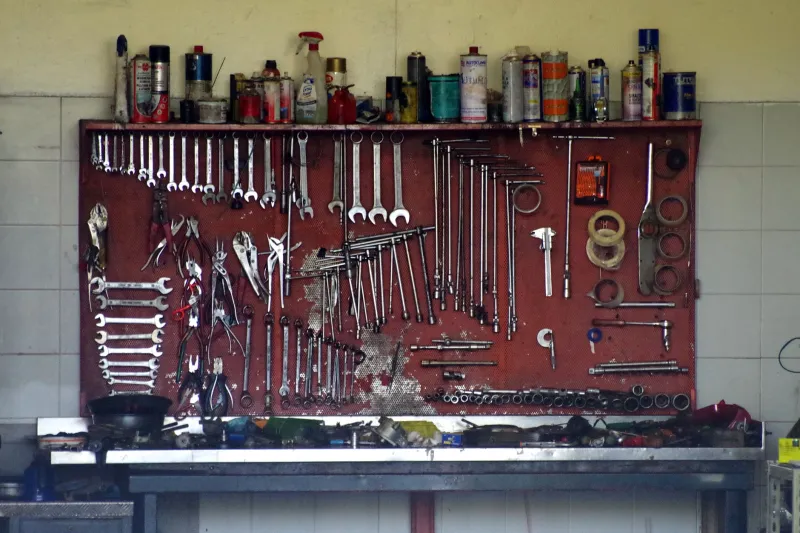
One of the most practical expressions of the maker gift economy is the tool library — a community resource where members can borrow equipment they couldn't afford to own outright.
The model has exploded in popularity over the past decade. The Minneapolis Tool Library, one of the country's most established, operates on a membership model that runs as low as $50 a year and gives members access to thousands of tools — from basic hand tools to power equipment most homeowners will use once in a decade. Members can borrow what they need, use it, and return it for the next person.
It's not purely a gift economy in the strictest sense, but the spirit is the same: pooling resources so that access to making isn't gated by individual wealth. The result is a community of people who are invested in each other's projects in a tangible way.
Similar libraries have taken root in cities like Portland, Austin, Denver, and Philadelphia, each adapting the model to fit local needs. Some are run by nonprofits. Some operate out of public libraries. Some are entirely volunteer-driven.
Skill-Shares: Teaching as the Ultimate Handmade Gift
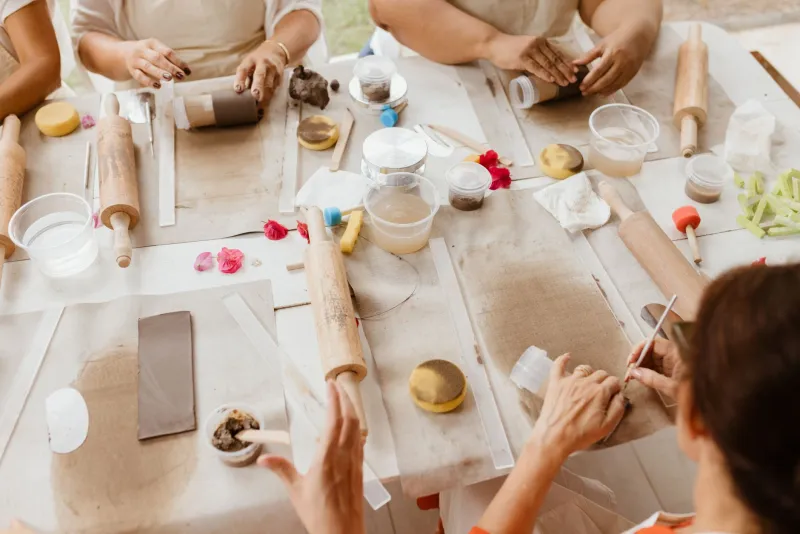
If tools are the hardware of making, skills are the software. And skill-shares — informal, community-organized teaching sessions where makers teach each other what they know — are one of the most vibrant expressions of the exchange economy in maker culture.
They happen everywhere. A Saturday afternoon in a community center where someone teaches basic upholstery. An evening in a backyard where a neighbor walks six people through sourdough fermentation. A weekend workshop at a local makerspace where a retired electrician teaches safe wiring basics to first-time homeowners.
The currency is knowledge, and nobody's keeping a ledger.
In New Orleans, a loose network of crafters called the Crescent City Makers Exchange has been running monthly skill-share events since 2019. "We started because we realized everyone in the group had something to teach and something to learn," says co-organizer Priya. "One month someone teaches natural dyeing. The next month someone else teaches basic welding. Nobody charges. Nobody has to."
The group has grown from a handful of friends to over two hundred members, connected through a group chat and a shared calendar. No dues. No bylaws. Just people who make things and like being around other people who make things.
Maker Co-Ops: Formalizing the Commons
Some communities have taken the exchange model further, formalizing it into cooperative structures that give makers shared ownership and shared responsibility.
Maker co-ops vary widely in structure, but the common thread is collective ownership and democratic decision-making. Members might share a physical space, pool purchasing power for materials, collectively market finished goods, or some combination of all three.
In Asheville, North Carolina — a city with a rich craft tradition — a woodworking co-op called Common Grain allows members to share a professional-grade shop that none of them could afford individually. Members pay a monthly contribution that covers overhead, and in return they get access to the space and equipment. Finished pieces are sold through a collective storefront, with revenue split according to a formula the members voted on themselves.
"We're not anti-commerce," says founding member Theo. "We just think the benefits of making should flow back to the makers, not to a platform or a middleman."
It's a subtle but meaningful distinction.
What This Means for Neighborhoods
The effects of these networks ripple outward in ways that are hard to quantify but easy to feel.
When makers share tools, fewer resources go to waste. When they teach each other, knowledge that might otherwise be lost gets passed on. When they trade finished work, money that might have flowed out of a neighborhood stays in it — or doesn't need to be spent at all.
Researchers studying social capital — the web of relationships and mutual trust that holds communities together — consistently find that shared economic activity is one of the most powerful ways to build it. Maker exchange networks, almost by accident, are doing exactly that.
"I know more of my neighbors now than I did before I joined the exchange," says Jamara, a textile artist in Kansas City who participates in a local craft-swap group. "Real neighbors. People I'd stop and talk to on the street. That didn't come from selling things online."
How to Find or Start Your Own Network
If this sounds like something your community is missing, the barrier to entry is lower than you might think.
Start by looking. Many skill-share networks and maker exchanges operate quietly through neighborhood apps like Nextdoor, local Facebook groups, or community bulletin boards. Your local makerspace — if you have one — is almost certainly connected to these networks or can point you toward them.
If nothing exists, start small. Host a skill-share in your living room. Propose a tool-lending arrangement with three neighbors. Organize a craft swap at a local coffee shop. The infrastructure doesn't have to come first. The relationships do.
The maker movement has always been about more than the objects we build. It's about the act of building — the curiosity, the problem-solving, the satisfaction of making something real. Sharing that with your neighbors, in whatever form that takes, might be the most powerful thing you can make of all.