No Membership Required: The Scrappy, Tight-Knit Maker Collectives Rewriting the Rules
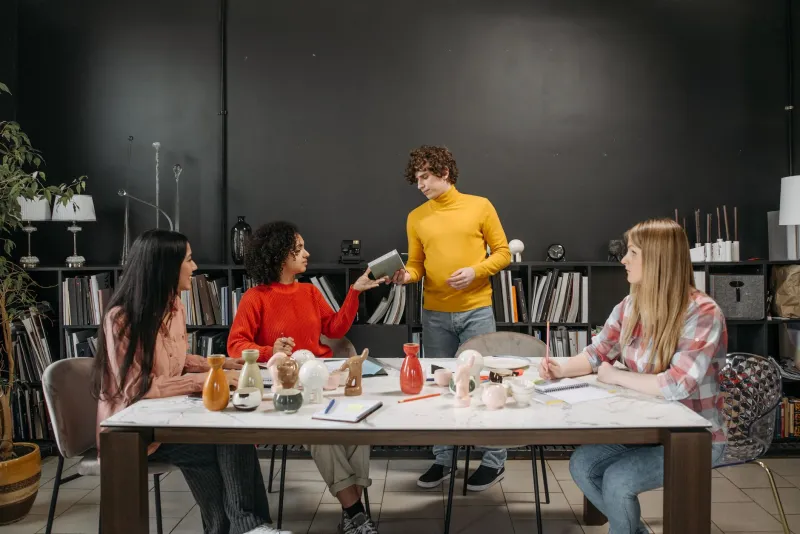
Somewhere in a converted barn outside of Bozeman, Montana, six people are gathered around a workbench on a Thursday night. One of them is teaching the others how to wire a solar panel array. Another brought homemade chili. There's no website, no membership fee, no liability waiver. Just a group of people who want to learn, teach, and build things together.
This is happening all over America right now — quietly, organically, and at a pace that's surprising even the people involved.
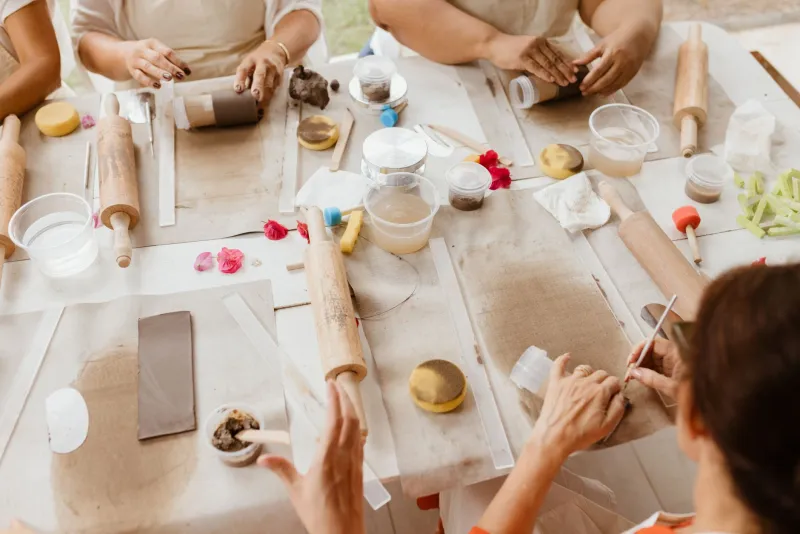
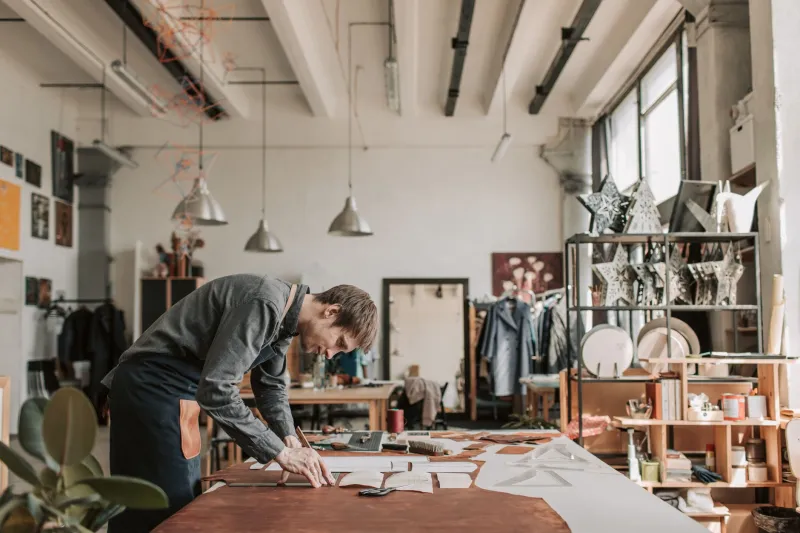
While the formal makerspace model — think shared equipment, paid memberships, structured programming — has done a lot of good for the maker movement, a parallel ecosystem has been growing in its shadow. Informal collectives, skill-sharing circles, and grassroots workshops are popping up in apartment building basements, rural properties, church halls, and converted shipping containers. They don't advertise much. They often don't have names. And they're thriving.
Why Informal?
Ask the people involved why they chose to organize outside of institutional structures, and you get a lot of the same answers.
"The makerspace near me is great," says Delia Ramos, who runs what she loosely calls a "craft circle" out of her two-car garage in San Antonio, Texas. "But it's also kind of intimidating if you're just starting out. There's a learning curve to even being there. We wanted something where you could show up not knowing anything and nobody would make you feel bad about it."
That accessibility point comes up constantly. Formal makerspaces, even the ones with sliding-scale memberships, can feel like places for people who already know what they're doing. The barrier isn't always financial — it's social.
Informal collectives tend to collapse that barrier fast. When you're in someone's living room, the power dynamic shifts. There's no expert at the front of the room. Everyone's figuring it out together.
The Geography of Grassroots
These groups aren't concentrated in any one region. They're showing up in dense urban neighborhoods and wide-open rural counties alike — often in response to the same underlying need: people want to make things, and they want company while they do it.
In Detroit, a loose network of about thirty makers shares tools, materials, and project advice through a group chat that started as a neighborhood Facebook group and evolved into something much more intentional. Members meet in rotating locations — someone's basement one month, a rented community room the next.
In rural Vermont, a collective of woodworkers, fiber artists, and electronics hobbyists has been meeting monthly in a barn since 2019. They've collectively built a chicken coop for a local farm, repaired a neighbor's antique furniture, and taught dozens of people skills that would otherwise require expensive classes or YouTube rabbit holes.
In Los Angeles, an apartment complex in Silver Lake has an unofficial maker floor — a handful of residents who've collectively turned a shared storage space into a workspace. It's not sanctioned by the building. It's not not sanctioned, either. It just exists, because people needed it to.
Small by Design
One of the most interesting things about these groups is that most of them don't seem to want to grow beyond a certain point.
There's a recurring theme in conversations with collective members: the intimacy is the feature, not a limitation. When you have eight or ten people in a group, everyone knows everyone. Trust develops fast. People are more willing to share half-formed ideas, ask dumb questions, and try things they might fail at publicly.
"We had a chance to 'go official' — someone offered us a small grant to formalize the whole thing," says Terrence Huang, who co-organizes a hardware hacking group in Chicago's Pilsen neighborhood. "We talked about it for a long time. Ultimately we said no. The moment you start writing bylaws and applying for 501(c)(3) status, you've changed what the thing is. We didn't want to change what it is."
That's not a universal sentiment — some collectives do formalize and thrive — but it speaks to something important about why these groups work. Structure has costs. Sometimes the cost is worth it. Sometimes it isn't.
Skill Sharing as the Currency
What makes these informal networks function isn't money — it's reciprocity. The implicit agreement is: I'll teach you what I know, you'll teach me what you know, and we'll both end up more capable than we were.
This isn't a new idea. Barn raisings, quilting bees, and community workshops are as American as anything. What's new is the range of skills being traded and the speed at which these networks can form and spread.
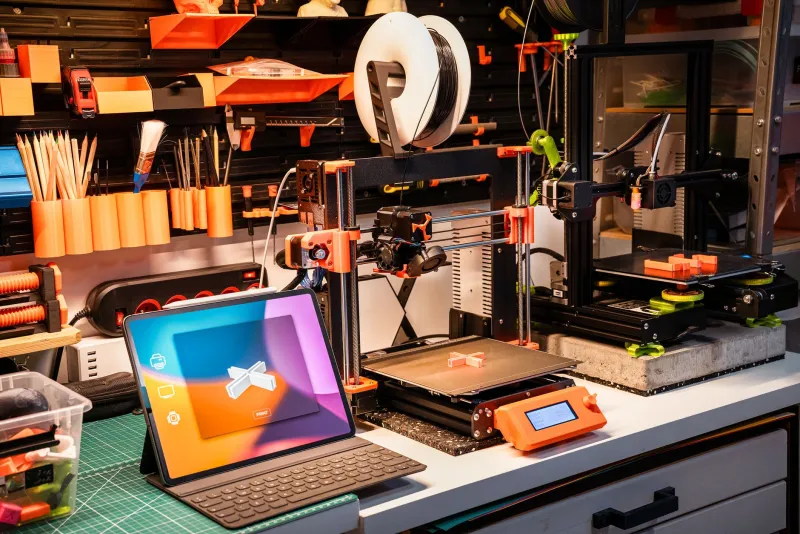
In one collective in Austin, Texas, a software developer who taught herself to weld is now teaching others. A retired electrician in the same group is learning 3D modeling. A high school art teacher is learning basic electronics. The cross-pollination of skills is producing projects none of them would have attempted alone — including a community art installation that's currently up for a local public art grant.
The Trust Question
Of course, informal networks come with real challenges. Without formal agreements, disputes about tools, space, or creative credit can get messy. Groups can fracture over personality conflicts in ways that a more structured organization might weather more easily.
But most long-running collectives have developed their own informal governance — unwritten but understood norms about how things work. Who can bring a guest. How shared tools are maintained. What happens when someone's project dominates the space for weeks.
"It's not like there are no rules," says Delia Ramos. "There are just no written rules. Everyone knows what's expected because we built those expectations together. That's actually stronger than a policy document, in my experience."
What This Means for the Maker Movement
The growth of these informal networks doesn't signal a rejection of the broader maker movement — it's an extension of it. These groups are doing what the maker movement has always done: finding creative, resourceful ways to bring people together around the act of building things.
If anything, they're a reminder that the spirit of making doesn't require a laser cutter or a membership card. It requires curiosity, a willingness to share, and somebody willing to open their garage on a Thursday night.
The barn in Bozeman will be meeting again next month. The chili rotation continues. And somewhere else in America, another group of people is figuring out that the best workshop they've ever been in was someone's kitchen table all along.